How to Swim with a Dog
I often go sea swimming with my dog Jake, a faithful and completely looney English Springer Spaniel. I frequently get many looks/comments I get whenever I do, both (mostly) positive and enthusiastic, but also some (unfortunately) negative.
Most dogs love water. English Springer Spaniels are famous for jumping into any body of water they can possibly find and indeed they were actually bred for this as part of their retrieval/working role as hunting dogs. Many people still use them for this role today when they go shooting and need the dogs to go into the water often with lots of vegetation and reads in order to find the bird and bring them back.
I didn't start by thinking "I want a dog to go swimming with", it just kind of happened once the dog was old enough to join me on my trail running activities around the beautiful and rugged Pembrokeshire coast.
Jake often used to come in with me willingly and swim behind me so this naturally morphed into him being a regular swimming companion whenever I went out on my own.
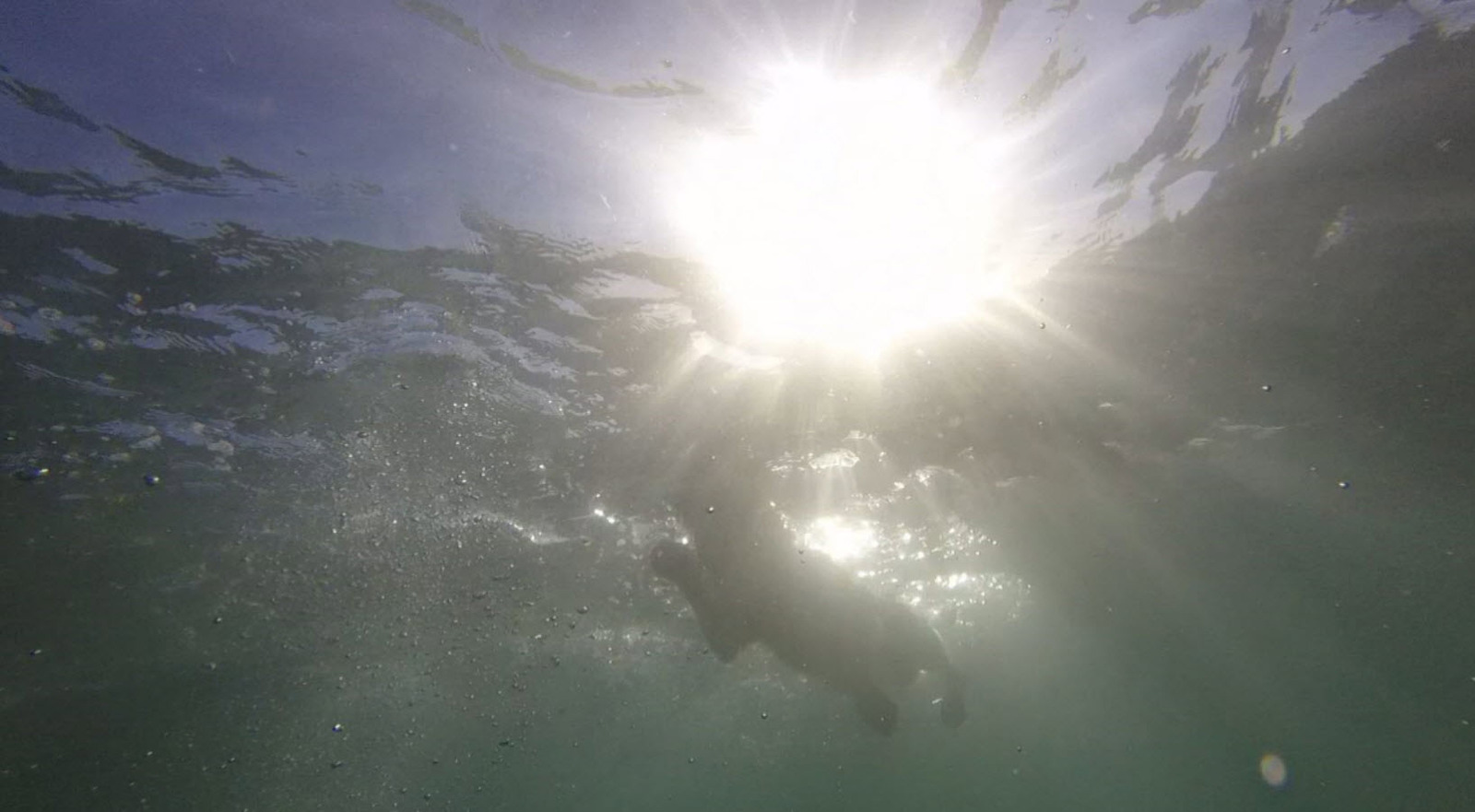
Dogs are excellent swimmers. They have even been used as lifeguards, such as the Newfoundland, often nicknamed the 'lifeguard dog' due to its instinct to rescue in water. Labradors, Golden retrievers and Leonbergers are also used for aquatic lifeguarding. Labradors, retrievers and Spaniels are all superb swimmers and very comfortable in any kind of water, from the sea to rivers or lakes.
How to Swim with a Dog
Depending on how well trained your dog is you can decide whether to allow the dog to swim beside or behind you or alternatively to tether them with a long leash to a secure belt around your waist so that at least they are always within reaching distance if you want to be able to check on them.
Free Swimming Method
This is great if your dog is well trained and not likely to wonder off! As it suggests you do the swimming the dog follows you or swims beside you, depending on how fast you can swim.
I have a friend who has a Golden Retriever rescue dog and, unbelievably, the dog used to regularly follow us, of his own accord, over 2-3 kilometre cross bay, deep water swims. If he got tired he would simply swim to the shore and follow us on the land and then join us back out at sea later on! The dog loved it.
Tethered Method
this method takes some getting used to, but I originally experimented with it because I love swim running and did not want my dog to go sniffing off in the bush or chase rabbits while I was running down a trail to the ocean. When I hit the water, instead of unclipping him when getting into the water I experimented with simply keeping him tethered and letting him swim behind me. I used aluminium's carabiners tethered to a nylon clip belt around my waist and simply swivelled the clip round to the small my back to start the swim, the dog behind me.
It worked perfectly!
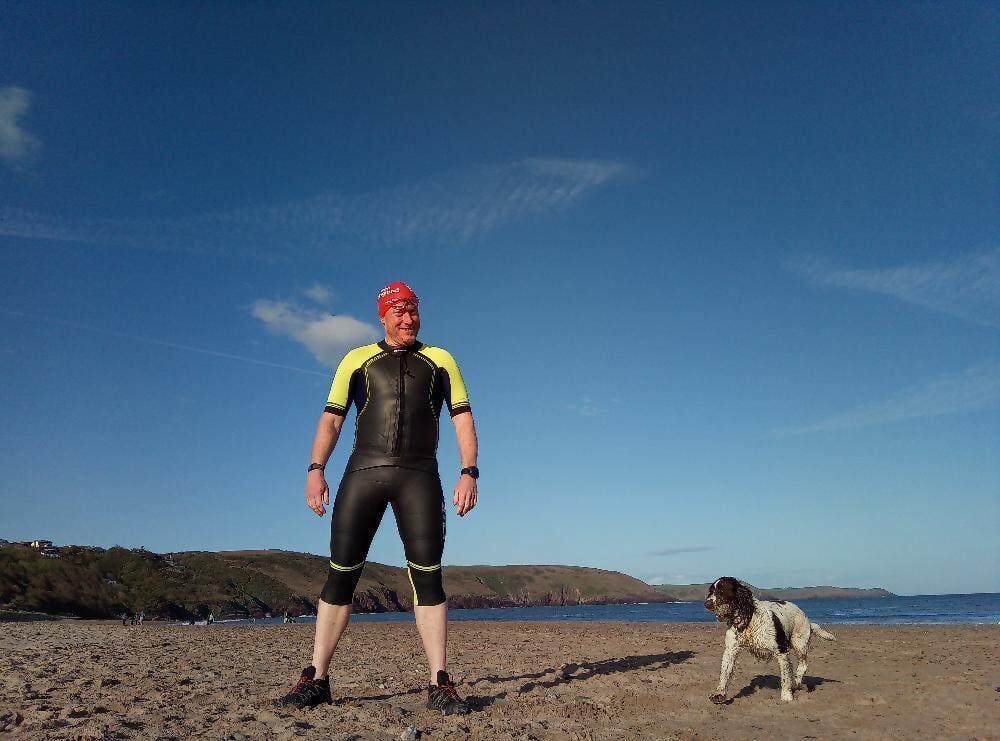
Jake, being a 'working dog', needs to be led by his master and loves seeing me just in front of him, having someone to follow and keep up with.
Sometimes though, even he has enough of the water and decides to swim to shore even though he's tethered to my waist! This gets interesting and often results in me swimming sideways because they're such strong swimmers - he literally pulls me into shore. If this happens I simply unclip him at his collar and let him swim to shore and continue swimming - he follows me by sight from the beach.
Is it Safe for the Dog?
Of course! In fact, just as it is for us, a combination of walking or running and swimming combined is a fantastic workout for your dog and a cold dip does him the world of good too.
Many dogs can swim better and faster than humans too, so they are completely safe in the water. There are a couple of things to look out for though, which are:
Sea temperature
As with humans the dogs will feel the cold although not as much as we do. Indeed, some dogs like Labradors, Golden Retrievers, Newfoundlands and Alsatians have 'double coats' and the inner coat is so thick they can swim around in the sea for an hour and not even get wet skin.
I grew up in the countryside near and on farms and was exposed to all kinds of 'outdoor' dogs. Dogs much tougher than we think and can easily handle a swim in the winter. If however you are concerned about the sea temperature you can always buy an insulated flotation jacket and use that.
Stinging Creatures
stinging creatures such as jellyfish do not affect dogs because of their fur.
Rocks
this is a valid point and I would advise choosing a beach where you can enter and exit the water along a shallow gradient sandy beach so you do not run the risk of hurting the dogs pads when getting out of the water.
Waves
After a while swimming with my dog although I noticed he was a bit scared of big waves (1m+) and indeed without a flotation jacket a dog can get swamped by breaking waves quite easily (although dogs know how to hold their breath so even this is not 'dangerous'). I did not want to force my dog to go out of the break zone when the waves were big so in this case either I let him run along the shoreline or would only swim with him in small wave conditions, mostly in the summer. With this in mind if the waves are big or if it's choppy then I would not recommend the tethered method - this way your dog has the choice to follow you in the water or along the beach.
Fatigue
I must admit finding it a bit amusing when people criticise swimming with a dog because "he might get tired", but it has happened.
A Springer Spaniel has unbelievable amounts of energy and stamina. They can run and swim all day, non-stop, at flat out speed, then get home and STILL want to chase a ball or stick. They are bred for this level of activity, it is literally in their DNA.
In my opinion most breeds of dogs can easily handle swimming around in the water for a bit at any time of year but if you are concerned about fatigue then a flotation/insulated dog jacket would work and help save energy.
What to Be Aware Of...
Your Wetsuit
Whenever you stop for a breather, guaranteed your dog will want to come up and hug you! Dogs claws are very tough and often quite sharp so if you have a nice new wet suit on, do not expect it to last very long! If you need a wet suit yourself and you plan on swimming with your dog, then use an old one that you do not mind getting snagged.
Entry and Exit Points
Dogs are very agile getting in and out of water and in my experience can handle a rocky 'transition point', but it can be difficult for them if exiting from deep water - they cannot pull themselves out of the water like we can. Try to plan your swim so you have a nice sandy beach for them to get in and out.
Dead Marine Life
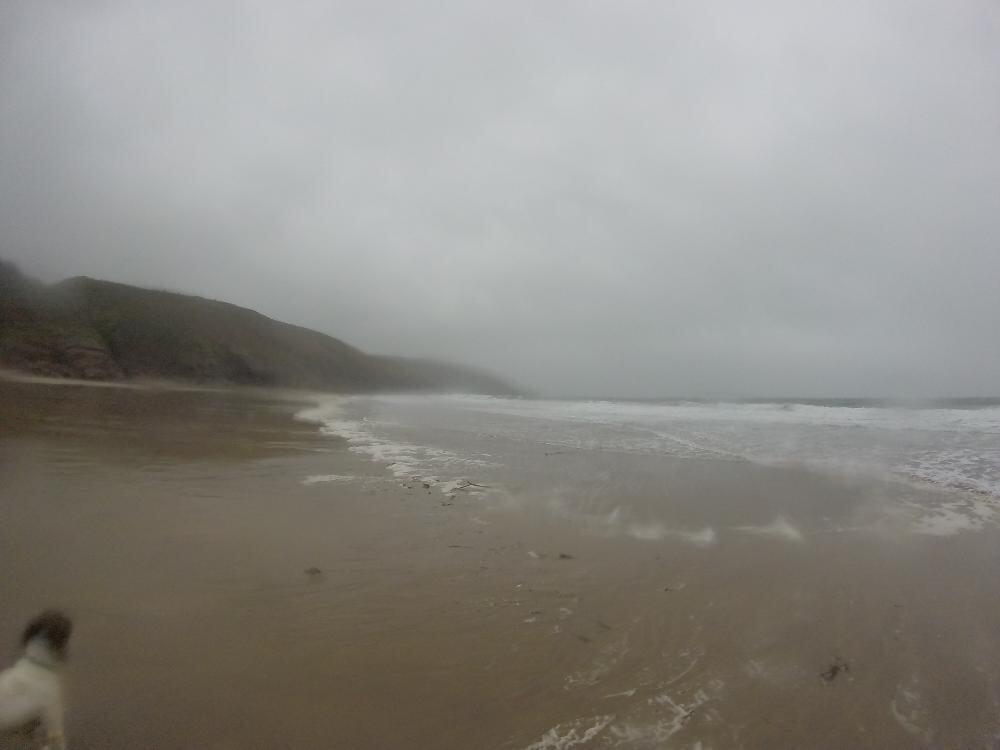
Sometimes you come across dead birds or other marine mammals on beaches, especially in the Winter. A dog will sniff it out and may sometimes attempt to eat it so be ready to stop that to prevent them getting ill.
Special Kit
You don't need much to swim with a dog but I would recommend the following:
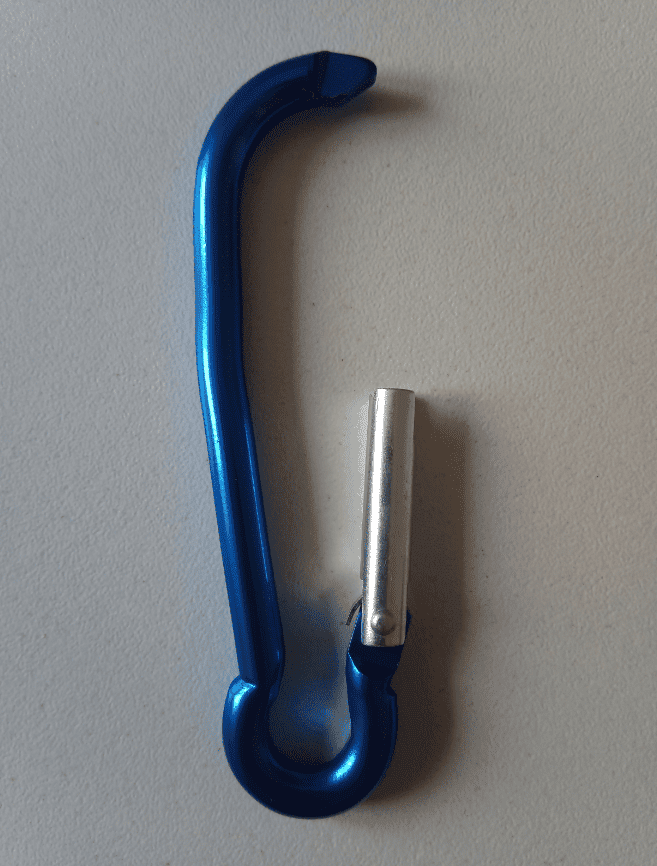
1) A strong nylon rope tether with a sturdy aluminium (rust proof) carabiner clip on both ends, secured with a proper hitch knot.
This can be used to clip one end to a nylon belt around your waist when swimming and the other end to the dog's collar.
Tip: use one or two small lightweight floats along the tether to keep it near the surface of the water - this will prevent the rope sinking and getting tangled in your feet or the dogs feet.
And/Or, it is especially useful when you are getting changed yourself on the beach - you can clip your dog to a nearby object in order to control them.
2) Dog Towel - for use in the car just to get excess water and sand off your dog before travelling home.
3) A bowl and water - as we do, dogs get thirsty, especially if you run and swim - take a bowl and some water so they can have a drink at the car park. Do not chill or heat the water.
4) Old sheets or coverings for your car seats - all it takes is 1 shake and the value of your car decreases drastically!!
5) Buoyancy/insulated dog hardness - as mentioned above these can provide peace of mind as they will help the dog to float if swimming long distances and can provide some insulation. They are also good because they usually come in high visibility material, which makes it easier to see the dog.
If like me you enjoy swimming in all conditions, all year round, in all weathers and sometimes find it hard to persuade your more sensible friends to do so (!) then swimming with your dog is the perfect solution. They never need to be asked twice. They will always be ready at a monent's notice. And it gives the dog and you a terrific workout!
Happy swimming, WOOF!