Sighting Techniques for Open Water Swimming
Sighting is one of the most underrated and under practised elements of open water swimming. Do it wrong, you kill your stroke. Do it too often, you drain your energy. Not enough, you zigzag. If you are going to do sighting, do it right.
When a swim student asks us to show them how to sight, the response is always to split it into several parts:
1) how to sight
2) how often to sight
3) what to sight on
4) practise makes perfect
How to Sight
There are two basic techniques to do sighting, one more efficient than the other.
The Classic Mistake: Combining Sighting with Breathing
Most people have not really been taught how to sight properly and tend to do it when doing the breathing phase of the stroke. This consists of either breathing first, then bringing the head around to do the sighting; or sighting first, then swinging the head round to breathe.
Advantages: Fairly easy to do as it is an 'extension' of your breathing phase.
Disadvantages: Causes the head to raise too high and be out of the water for too long, which causes the legs to drop.
Crocodile Eyes: The Efficient Sighting Technique
Split sighting out into a separate phase of your stroke. Do not breathe when you sight - "sight when you sight".
The physical sighting action can be done on either arm and the technique involves arching the back slightly and looking directly forwards, eyes out the water, mouth underwater - "crocodile eyes".
Advantages: Requires strength and an efficient stroke as basis to master sighting, minimises drag as legs remain in higher position.
Disadvantages: Takes practise, requires a good base stroke and a strong back. May not be so effective in choppy conditions.
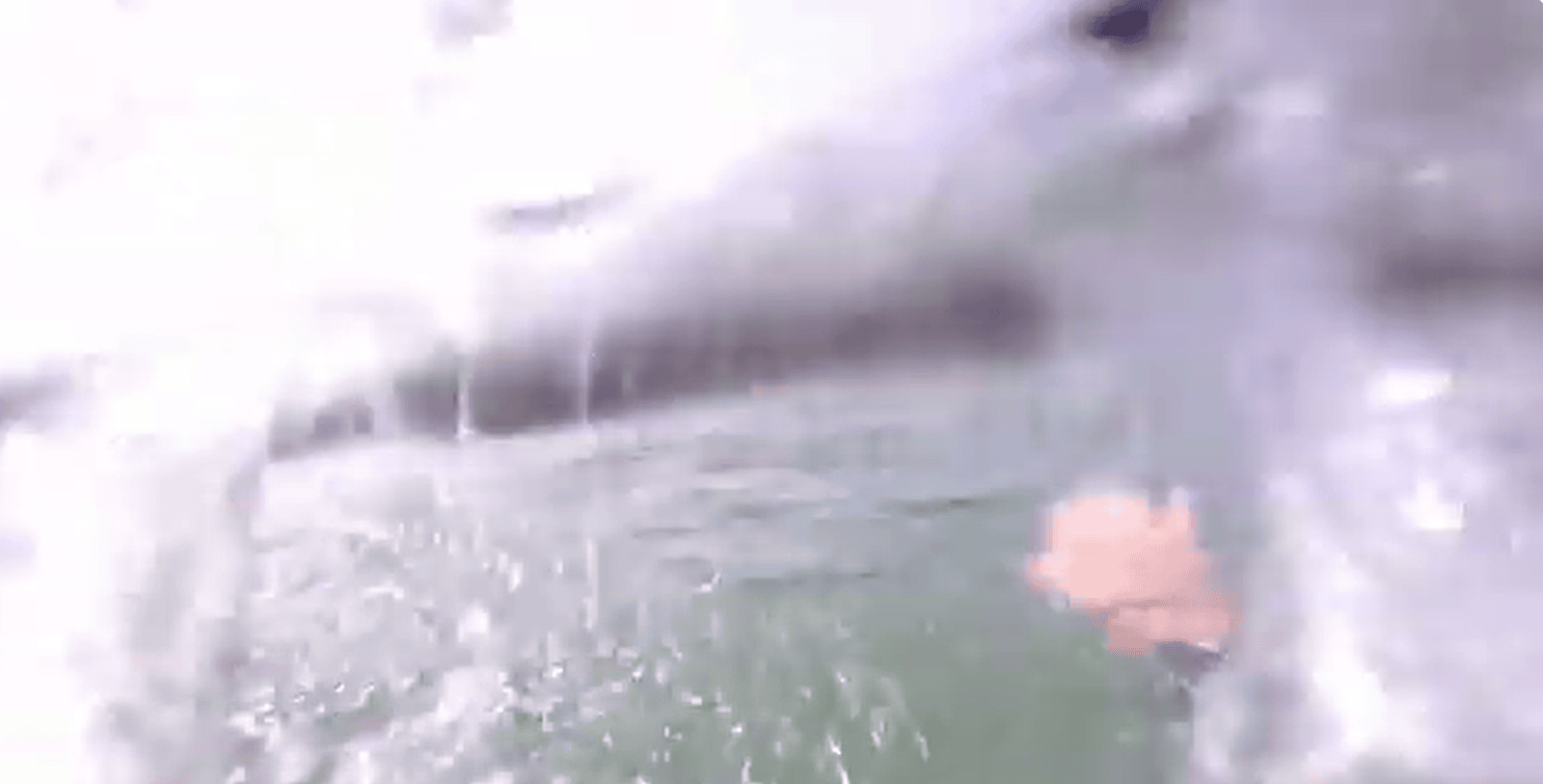
Efficient Open Water Sighting: Step 1
Here we see the swimmer has done the pull using the left arm and instead of breathing or keeping the head down he does a sight and uses his back to arch and lift the head slightly our of the water - the mouth is still submerged. Yes, there's not much time to see things, so be prepared!
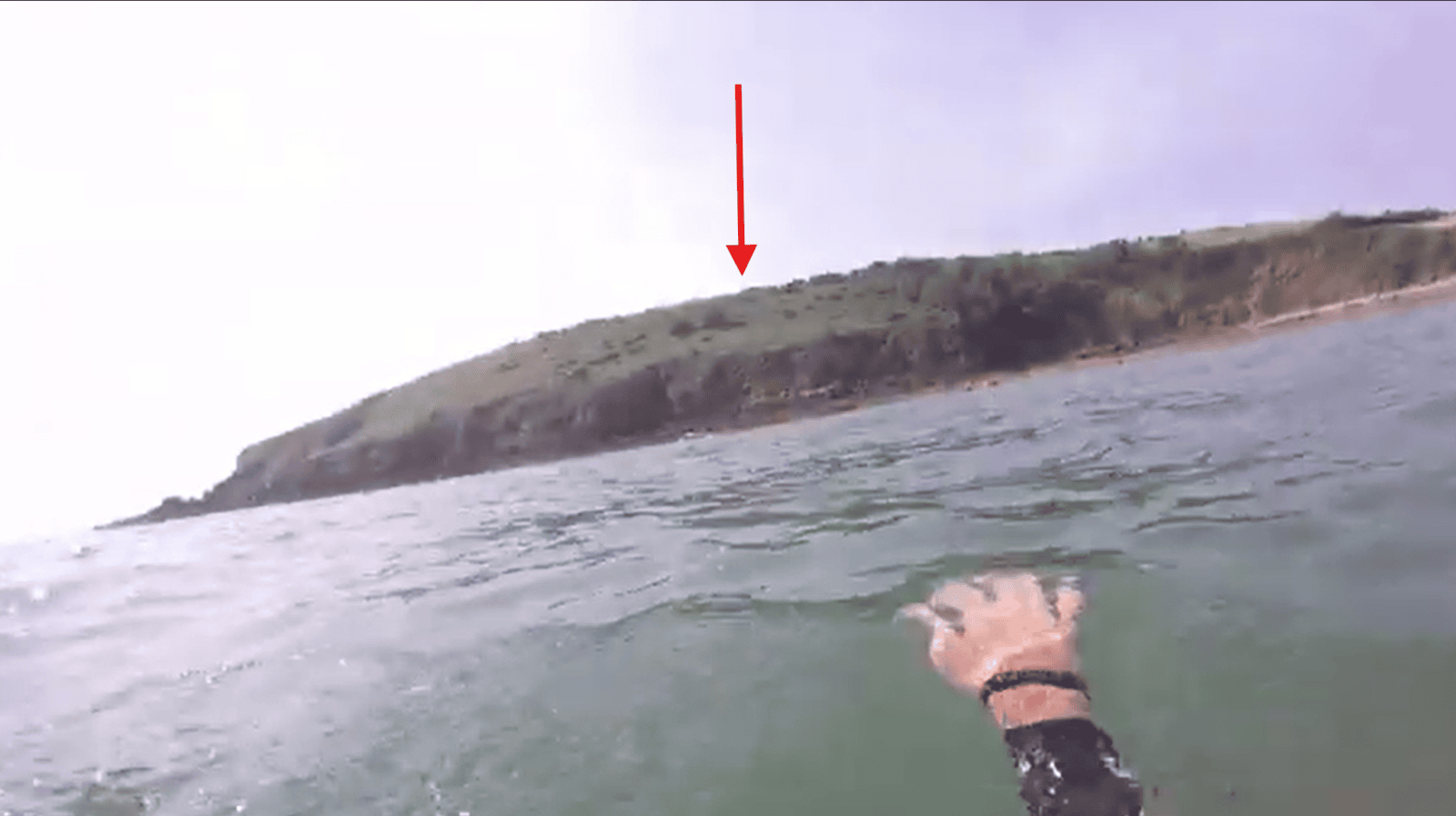
Efficient Open Water Sighting: Step 2
The water clears from the swimmer's face and the land features/skyline are visible. This swimmer is using the apex of the headland hill as their sighting reference feature.
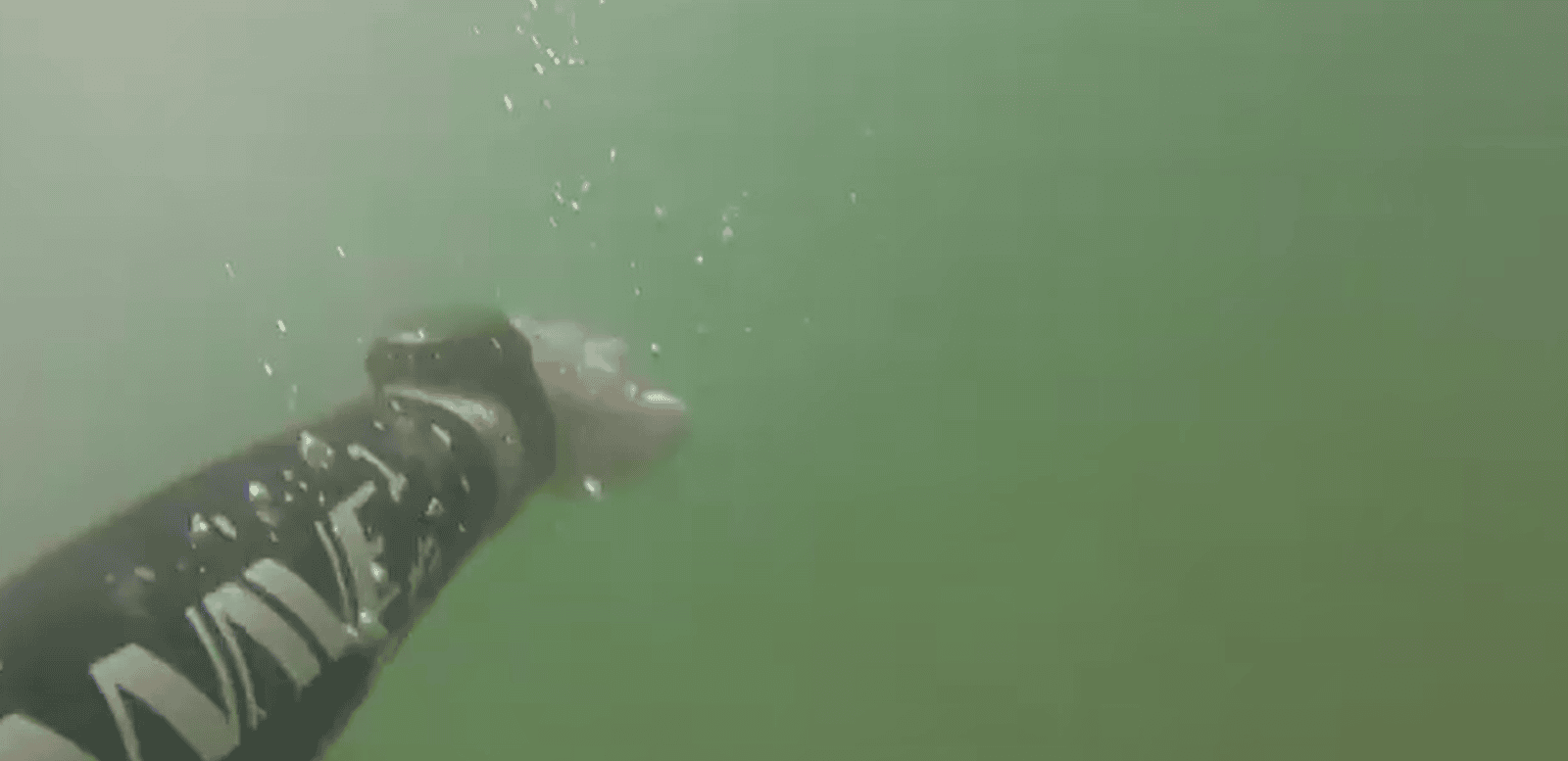
Efficient Open Water Sighting: Step 3
After seeing the reference point and making any adjustments to the swim course the swimmer drops the head down and continues swimming.
Here's how sighting - using the 'crocodile eyes' method - looks from the swimmer's perspective. You can see how the swimmer breathes to the side, but sights to the front, at which point he is not breathing, but instead keeping the eyes just out of the water and the mouth submerged. The sighting reference is the top of the headland.
How Often to Sight?
How often to sight is an important factor that many people pay little or no attention to.
Do it too often, you drain your energy. Not enough, you zigzag. There's an easy drill to work out how often to sight:
- Stand in the shallows, focus on a sighting feature.
- Get calm, focus on the feature, start swimming with your eyes closed.
- It is imperative you keep your eyes closed but swim normally, heading towards the sighting feature in your mind.
- Get a friend to walk behind you and count your (single) strokes before you start veering left or right.
- When you start veering your friend taps your feet to stop and repeat.
- Do this 3 times.
- Calculate the average number of strokes.
- Subtract 3.
That's your sighting frequency at that point in time. So...
Frank focuses on a church on the skyline...
He closes his eyes, swims off on attempt #1 and does 12 strokes before he starts veering left.
His friend taps his feet, he repeats the activity and does attempt #2 in 12 strokes before veering off course.
Attempt #3 results in another 12 strokes before veering left again.
Average: 12+12+12 = 36 divided by 3 = 12
Subtract 3: 12 - 3 = 9
This means Frank should do a sighting action every NINE single arm strokes for maximum sighting efficiency.
TIPS:
- If you miss the landmark on your sighting stroke, don't worry - get yourself together, try again soon after.
- The number NINE is a guide at that time - this number should go down as you improve your stroke.
- Do the above exercise every few months to be as efficient as possible.
What to Sight On?
What to sight on depends on the unpredictable nature of the sea conditions.
It can be flat calm or it can be completely crazy, with large swell / waves. In this case it is unlikely you will be able to sight using the buoys, even though they are brightly coloured and 6 feet high.
In this case it makes sense to sight on permanent, land based features that you can see easily and quickly:
- Church spires
- Houses
- Prominent buildings
- Prominent trees
- Patches of woodland / copses
- Cliff edges
- Fields with distinct coloured cops, eg. wheat fields in late summer, rapeseed fields etc
- Rock formations
- Hilltops, mountain peaks
- The sun
- Etc.
TIP:
Choose features that are silhouetted on the skyline as they are much easier to see in the short time you have when doing a sighting stroke.
Practise Makes Perfect
- There's no other way to improve your sighting than to practise, practise, practise!
- You can practise in the pool or in open water.
- A useful drill in a 25m pool is to 'bounce' in the water, with a lungful of air, lifting the head slightly on each stroke/bounce, focussing on the end of the pool, not breathing, just sighting. This will help build the muscles required for an efficient sighting technique for use in open water.
- Over time your sighting frequency should come down and your swim track improve.
Learn Sighting With An Expert
Why not book one of our swims and learn how to do proper open water sighting from an expert?
Swim Pembrokeshire's Head Coach/Owner Andrew has been sea swimming his whole life and is an ex-Welsh champion age group swimmer. He's done the IMW route in 53 minutes and has swum it hundreds of times and has expert knowledge of the key swim spots around the Pembrokeshire coastline.
Learn all of the above sighting techniques from him as part of your swim booking, including valuable tips and tricks that you can only get with local expertise.
Good luck!